


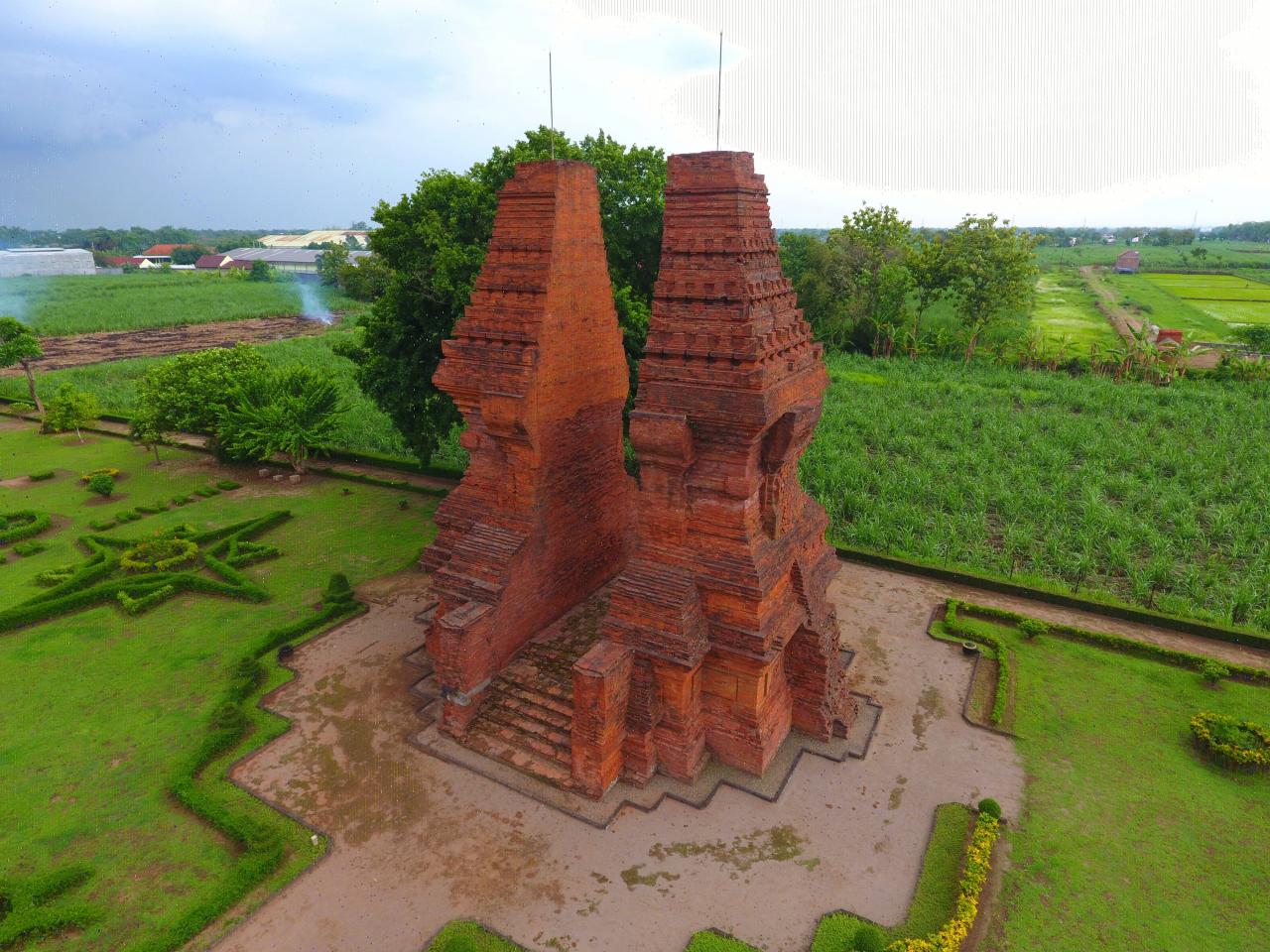
Majapahit Kingdom (1293-1527) was the greatest Hindu kingdom in the history of Indonesia, which reached its golden age in the 13th-14th century AD. The royal capital is presumed to be located in Trowulan, East Java, based on distribution of archaeological findings. Research by the Indonesian Field School Archeology (IFSA) in 1991 revealed that the capital encompassed around 10 x 11 km of area. This macro boundary is also supported with the findings of 4 yoni forming a rectangle around Trowulan area, and thus likely to be remnants of monuments marking the city’s boundaries. The government through the Minister of Education and Culture Decree No. 260/M/2013 has designated the area as a National Strategic Area (2008) covering Mojokerto and Jombang Regencies, and as Trowulan National Cultural Heritage Area (2013) encompassing 92.6 km² worth of land, in their interpretation of the city’s boundaries. The Indonesian Integrated Archaeological Research (PATI) from 2008 to 2014 again confirmed the results by identifying that Majapahit Palace is indeed located in Trowulan.
Many interdisciplinary experts have attempted to study the existence of the Majapahit Royal Capital in Trowulan based on data found on artifacts, building remnants, inscriptions, or literatures. The great number of Majapahit researchers from the colonial period to the present day hailed from various scientific backgrounds, including Wardenaar, R.T. Kromo Adi Negoro, Henry Maclaine Pont, Bruno A.G. Nobile de Vistarini, Pieter van Stein Callenfels, Stutterheim, J.L.A. Brandes, H. Kern, N.J. Krom, Poerbatjaraka, C.C. Berg, F.D.K. Bosch, A. Teeuw, Th. G.Th. Pigeaud, J. Noorduyn, W.P. Groeneveldt, Hasan Djafar, Slamet Mulyana, S.O. Robson, Hadi Sidomulyo, I Ketut Riana, Kardono Darmoyuwono, Mundardjito, John N. Miksic, Agus Aris Munandar, Amrit Gomperts, Peter Carey, Arnoud Haag, Nurhadi Rangkuti, Bondan Hermanislamet, Oesriful Oesman, Wara Indira Rukmi, Adrian Perkasa, and Catrini Kubontubuh.
The historical timeline of Majapahit Kingdom can be divided into 3 periods, such as:
1. The Golden Age (1293-1389);
2. The Fading Age (1389-1815);
3. The Reappearance (1815-present).
The Golden Age (1293-1389)
1. The Founding of the Kingdom (1293-1309) by Raden Wijaya after defeating Jayakatwang and the Mongol (Tartar) army.
2. The Growing Period (1309-1350), a period when Majapahit was ruled by Jayanegara (Sri Maharaja Wiralandagopala Sri Sundarapandya Dewa Adhiswara) and succeeded by Tribhuwana Wijayottunggadewi Dyah Gitarja. An important milestone in this period was when Gajah Mada was appointed as Mahapatih of Majapahit and pronounced the Palapa Oath.
3. The Golden Age (1350-1389), Majapahit ruled by Hayam Wuruk reached the peak of glory with the success of extensive networks in trade and politics to unite the archipelago.
The Fading Age (1389-1815)
1. The Decline (1389-1478), a period when the kingdom’s pride and prestige began to decline following the death of Hayam Wuruk;
2. The Desolation (1478-1527), which began with the struggle for power and the transfer of the capital from Trowulan to Daha in 1478;
3. The Silence (1527-1815), a period when Majapahit was attacked by Demak and its inhabitants fled from Majapahit.
From the Golden Age to the Fading Age, Majapahit went through 13 rulers and 1 period of power vacuum.
The Reappearance (1815-present day)
1. Rediscovery until the Java War;
2. Post-Java War, forced cultivation system, industrialization, and liberalism periods;
3. Research during the colonial period;
4. Post-independence to the present day period.


